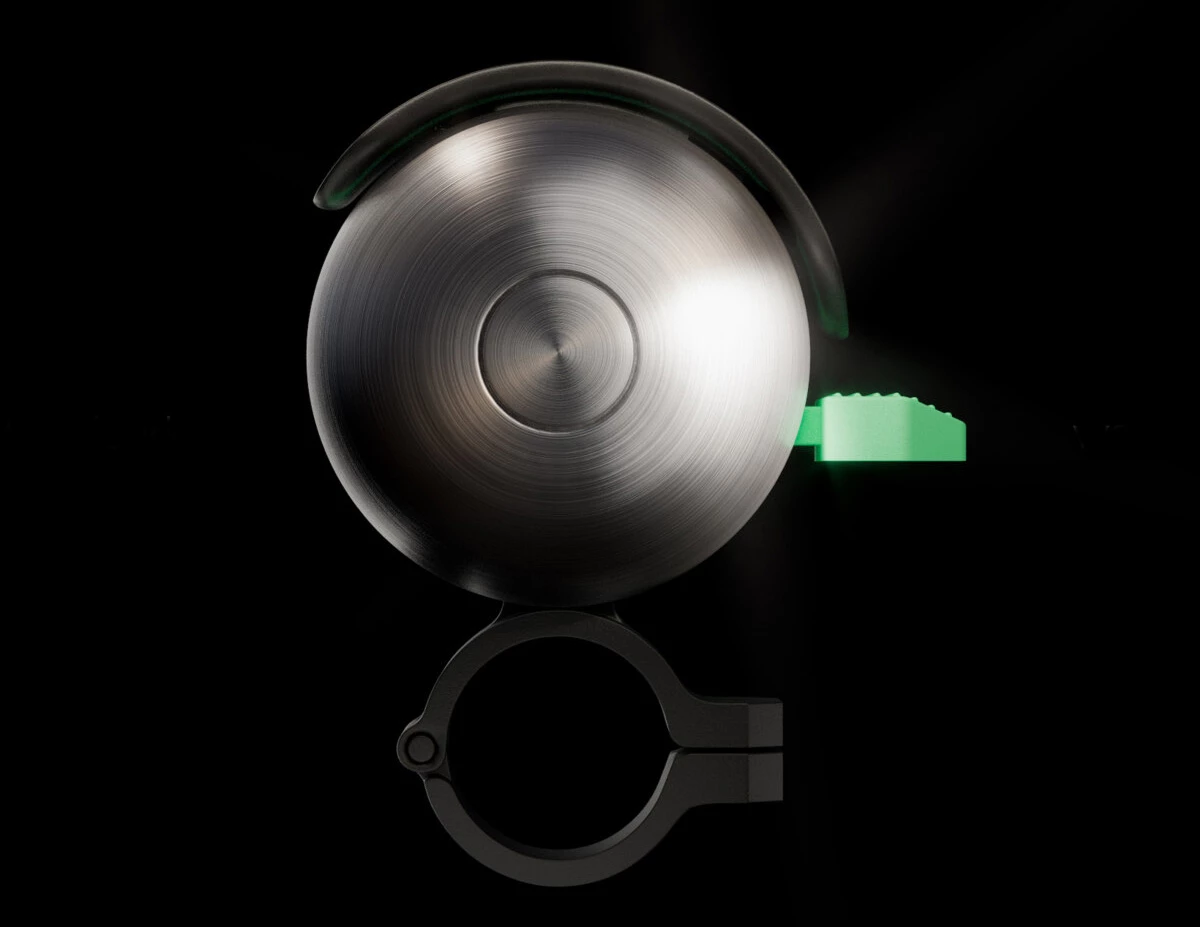
In our increasingly connected and often noise-saturated urban environments, the simple act of cycling safely has become surprisingly complex. As city streets fill with more bicycles and pedestrians equipped with advanced audio technology, a silent threat has emerged: the inaudibility of traditional warning sounds. Enter the Skoda Bike Bell, specifically the innovative Skoda DuoBell, a groundbreaking piece of engineering designed to cut through the digital silence and ensure pedestrian safety. This article delves into how Skoda, a company with deep roots in bicycle manufacturing, has reimagined a fundamental cycling accessory for the modern age.
The Growing Challenge: Active Noise Cancellation and Urban Cycling Safety
The ubiquity of Active Noise Cancellation (ANC) headphones and earphones has revolutionized personal audio, offering serene escapes from the din of daily life. While a boon for commuters and music lovers, this technological marvel presents an unforeseen challenge for urban safety. ANC works by analyzing ambient sound waves and generating inverse waves to cancel them out, effectively muting much of the external world. As a result, pedestrians engrossed in their audio—or simply trying to block out city noise—are increasingly unaware of their surroundings, particularly the approach of a bicycle.
This escalating inattentiveness coincides with a dramatic rise in urban cycling. Major cities worldwide are experiencing a cycling boom, with initiatives promoting active transportation and dedicated bike lanes becoming more common. For instance, Transport for London data highlighted a worrying trend, reporting a 24% increase in bike-pedestrian collisions in 2024. This statistic underscores a critical, often overlooked, safety gap: traditional mechanical bike bells, designed for a less technologically advanced era, are simply no longer effective enough against the sophisticated algorithms of modern ANC headphones. Cyclists find themselves ringing their bells, only to see pedestrians remain oblivious, creating hazardous situations for everyone on the street.
Introducing the Skoda Bike Bell: A Mechanical Marvel for the Digital Age
Faced with this growing safety concern, Czech car manufacturer Skoda—a company that proudly began its journey by manufacturing bicycles in 1895—stepped up to the challenge. Their solution, the Skoda DuoBell, is a testament to ingenuity: a fully mechanical bicycle bell designed specifically to outsmart and penetrate active noise cancellation algorithms. Rather than relying on digital fixes, Skoda’s approach is refreshingly analog, leveraging a deep understanding of acoustics to achieve superior audibility.
The DuoBell isn't just another bike bell; it's the culmination of scientific research and meticulous engineering. It represents a proactive step towards enhancing safety in shared urban spaces, ensuring that cyclists can effectively warn pedestrians, even those cocooned in their private soundscapes. This innovative Skoda Bike Bell aims to bridge the auditory gap created by advanced headphones, restoring a crucial layer of communication and warning between urban users.
The Science Behind the DuoBell: Unveiling the "Safety Gap"
The breakthrough behind the Skoda DuoBell emerged from a unique collaboration between Skoda and a team of scientists from the University of Salford. Their extensive acoustic testing focused on understanding precisely how ANC technology processes and cancels sound. What they discovered was profound: a narrow, specific frequency band—between 750Hz and 780Hz—where ANC algorithms are demonstrably least effective. This crucial finding identified what researchers termed a "safety gap," a frequency window that consistently slips through noise-cancelling filters.
The Skoda DuoBell was then meticulously engineered to exploit this discovery. Its primary resonator is precisely tuned to emit sound within this critical 750Hz-780Hz range. This strategic acoustic design ensures that when the DuoBell rings, it generates sound waves that ANC systems struggle to process quickly enough to suppress, significantly increasing the likelihood of the bell being heard by a pedestrian wearing headphones. This isn't about brute force volume; it's about targeted frequency emission that bypasses suppression mechanisms.
Engineering for Audibility: Beyond a Single Frequency
Skoda's commitment to safety didn't stop at identifying a single "safety gap." To further enhance the DuoBell's efficacy and resilience against potential future advancements in ANC, additional layers of acoustic innovation were integrated:
- Dual Resonators: Beyond the primary resonator tuned to the 750Hz-780Hz band, the DuoBell features an additional resonator tuned to a higher frequency. This combination creates a more complex sound profile that is even harder for ANC algorithms to fully neutralize.
- Irregular Hammer Mechanism: The bell incorporates a specially designed hammer mechanism. Unlike the predictable, rhythmic strike of a conventional bell, the DuoBell delivers rapid, irregular impacts. This unpredictable pattern generates sound waves that ANC systems cannot process quickly enough to anticipate and suppress, further ensuring penetration.
Combined, these fully mechanical elements generate a unique auditory signature that ANC algorithms simply cannot manage effectively. The result is a bell that significantly increases the audibility of a cyclist's approach, even for pedestrians immersed in their audio worlds. The ingenuity lies in its simplicity and its deep understanding of how sound interacts with modern technology.
Why the Skoda DuoBell Matters: Real-World Impact and Broader Implications
The introduction of the Skoda DuoBell is more than just a product launch; it's a significant stride in urban safety. The controlled testing results have shown that the DuoBell dramatically outperforms standard bells in reaching pedestrians wearing ANC headphones. This has profound implications for reducing collisions and fostering a safer coexistence between cyclists and pedestrians in bustling cityscapes.
What's particularly impressive about Skoda's initiative is their transparency. The company has publicly documented the entire development process, from lab testing at the University of Salford to live street trials. This open approach not only validates the science behind the DuoBell but also encourages broader industry engagement. It poses a crucial question to audio companies: should a "safety gap" like this be intentionally maintained for the greater good of public safety?
While the DuoBell offers an immediate and effective solution, the long-term challenge remains. Audio technology will undoubtedly continue to evolve, potentially leading to ANC systems that could eventually close this discovered "safety gap." This highlights the critical need for ongoing dialogue and perhaps even industry standards to ensure that essential warning sounds always have a path to reach listeners. The DuoBell serves as a powerful reminder that sometimes, the most effective solutions to complex digital problems are surprisingly analog and thoughtfully engineered.
Enhancing Your Cycling Safety: Beyond the Bell
While the Skoda Bike Bell represents a monumental leap forward in urban cycling safety, it's crucial to remember that it's one component of a comprehensive safety strategy. For cyclists and pedestrians alike, vigilance and awareness remain paramount. Here are some practical tips to enhance safety for all urban road users:
- For Cyclists:
- Be Proactive: Use your DuoBell well in advance of approaching pedestrians, giving them ample time to react.
- Stay Alert: Even with the best bell, always be prepared for unexpected pedestrian movements. Eye contact can also be an effective communication tool.
- Visibility is Key: Complement your bell with high-quality front and rear lights, especially in low light or adverse weather conditions. Wear bright or reflective clothing to stand out.
- Maintain Your Bike: Regular maintenance ensures all safety features, including brakes and lights, are fully functional.
- Anticipate and Adapt: Be aware of common pedestrian behaviors, such as sudden changes in direction or distraction by phones.
- For Pedestrians:
- Situational Awareness: When walking in urban areas, especially near bike paths or busy streets, be mindful of your surroundings.
- Lower the Volume: If using headphones, consider reducing the volume or using transparency modes in busy environments to allow external sounds to filter through.
- Look Around: Periodically look over your shoulder and scan your environment for approaching cyclists or vehicles, even when crossing at designated points.
- Avoid Distractions: Limit screen time on your phone when navigating busy urban areas.
The Skoda DuoBell is a brilliant innovation, but true urban safety is a shared responsibility. By combining technological advancements with personal vigilance and a commitment to awareness, our city streets can become safer and more enjoyable for everyone. For more in-depth insights into the development and testing of this innovative safety device, explore Skoda Bike Bell - Article 2. You might also be interested in the broader impact of cycling innovations on urban mobility in Skoda Bike Bell - Article 3.
Conclusion
The Skoda Bike Bell, particularly the pioneering DuoBell, stands as a critical piece of innovation addressing a very modern problem: the silent threat posed by active noise-cancelling headphones. By strategically targeting a specific frequency range and employing clever mechanical engineering, Skoda has crafted a device that ensures crucial warning sounds cut through the digital noise. This project not only highlights Skoda's enduring legacy in cycling but also underscores the importance of thoughtful, safety-driven design in an increasingly complex urban landscape. As our cities continue to evolve, blending technology with traditional modes of transport, solutions like the DuoBell are essential for fostering safer, more harmonious coexistence for all.