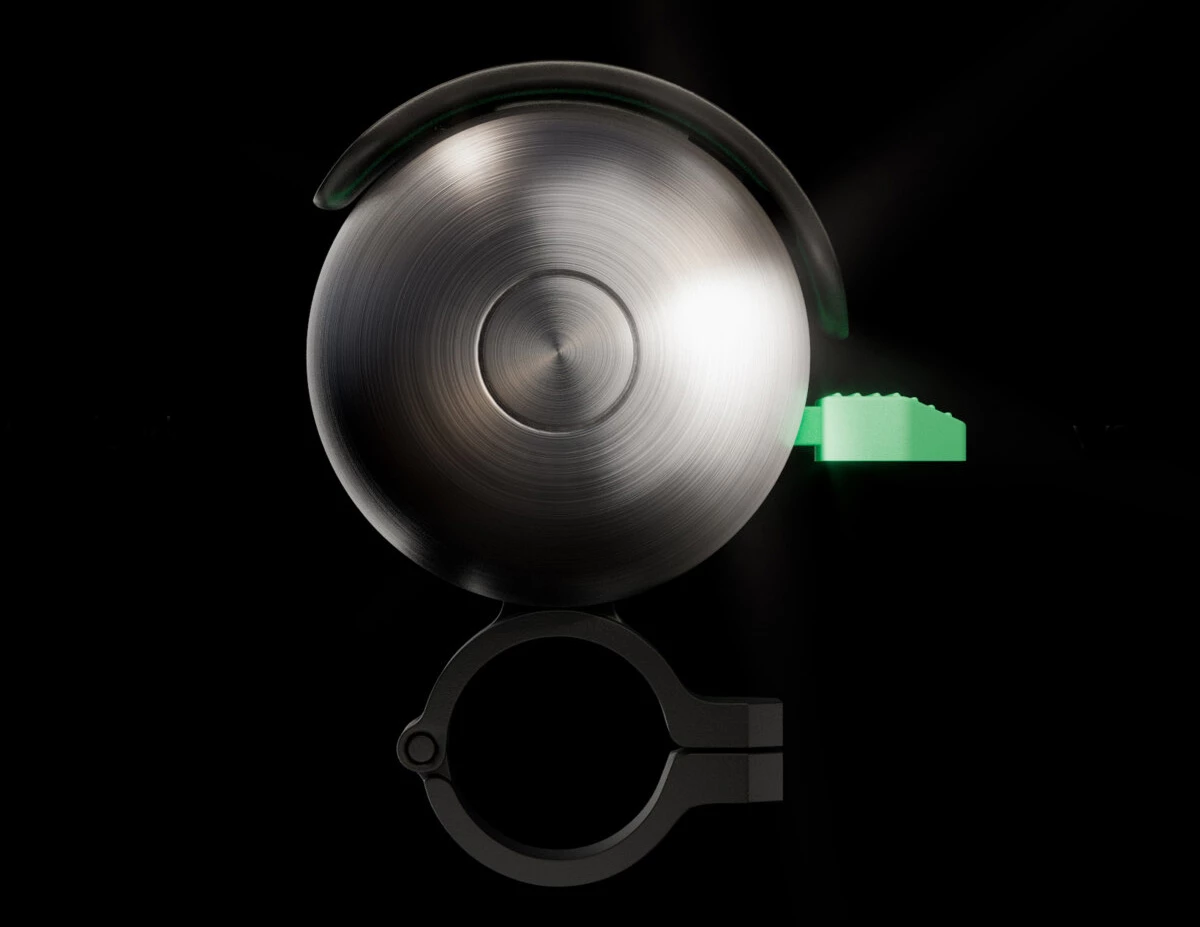
The soundtrack of modern urban life is increasingly personal. With the proliferation of high-quality headphones, particularly those featuring Active Noise Cancellation (ANC), individuals can immerse themselves in their own sonic worlds, filtering out the hustle and bustle of city streets. While this offers a blissful escape for many, it has inadvertently created a new, silent hazard for cyclists: pedestrians simply aren't hearing traditional bike bells anymore. Enter the Skoda Bike Bell, specifically the groundbreaking Skoda DuoBell – an ingenious, mechanical solution from a company with deep roots in cycling, designed to cut through the digital silence and make urban roads safer for everyone.
As cities worldwide encourage active transportation, the interaction between cyclists and pedestrians intensifies. Inattentive pedestrians, shielded by their ANC headphones, become vulnerable, increasing the risk of collisions. This isn't just anecdotal; major cities like London have reported significant upticks in bike-pedestrian incidents, with data from Transport for London indicating a 24% rise in 2024. Recognising this urgent problem, Skoda, a brand that began its journey by manufacturing bicycles, has revisited one of the most fundamental safety tools on a bike and reinvented it for the 21st century.
The Silent Epidemic: Why Traditional Bike Bells Are Failing in the ANC Era
Active Noise Cancellation technology has advanced remarkably, transforming headphones and earphones into powerful tools for blocking out unwanted ambient noise. From the rumble of public transport to the chatter of a busy street, ANC effectively creates a personal bubble of quiet. While a boon for commuters and music lovers, this technological marvel has a critical second-order effect: it renders many traditional warning sounds, including the classic bicycle bell, largely ineffective. Pedestrians, engrossed in their audio, often remain oblivious to an approaching cyclist, leading to dangerous situations that could easily be avoided.
The issue isn't a lack of vigilance on the cyclist's part, nor is it malice from the pedestrian. It's a fundamental breakdown in communication caused by a technological gap. Standard bike bells, designed decades ago, operate on frequencies and sound patterns that ANC algorithms are now extremely adept at identifying and cancelling. This "silent epidemic" highlights a pressing need for innovation in cycling safety, urging us to reconsider even the simplest components of our bikes.
Introducing the Skoda DuoBell: A Mechanical Masterpiece for Modern Streets
Rather than developing a complex digital solution, Skoda, in collaboration with scientists from the University of Salford, approached the problem with surprising analogue elegance. Their answer is the Skoda DuoBell, the first bicycle bell specifically engineered to penetrate ANC headphones. This isn't just another bell; it's a testament to how deep scientific understanding combined with mechanical ingenuity can solve contemporary problems.
The breakthrough came from extensive acoustic testing, which identified a critical "safety gap" – a narrow frequency band where ANC technology is least effective. Researchers discovered that sounds emitted between 750Hz and 780Hz consistently bypass noise-cancelling filters, reaching the listener's ear more effectively. This seemingly small window became the foundation of the DuoBell's design, transforming a simple concept into a sophisticated safety device. For a deeper dive into the initial concepts and development, you might find Skoda Bike Bell - Article 1 particularly insightful.
How the DuoBell Outsmarts Noise Cancellation
The brilliance of the Skoda DuoBell lies in its meticulously engineered components, which work in concert to create a sound profile that confounds ANC algorithms:
- Precision-Tuned Resonator: The primary resonator is expertly tuned to emit sound precisely within that crucial 750Hz-780Hz frequency band. This ensures the bell's core chime hits the acoustic "blind spot" of most ANC systems.
- Additional High-Frequency Resonator: To further enhance its efficacy, the DuoBell incorporates a second resonator, tuned to a higher frequency. This adds complexity to the sound signature, making it even harder for ANC algorithms to predict and suppress.
- Specially Designed Hammer Mechanism: The bell's striking mechanism is no ordinary striker. It's engineered to deliver rapid, irregular strikes. This unpredictable rhythm generates sound waves that ANC algorithms struggle to process quickly enough to cancel effectively. The erratic nature prevents the algorithms from learning the sound pattern and creating an inverse wave.
The combination of these elements creates a unique auditory signature – one that is both distinctive and difficult for noise-cancelling technology to mitigate. Skoda didn't just theorise this; they meticulously documented the entire process, from rigorous lab testing to real-world street trials, making their findings accessible to everyone.
Beyond the Bell: Broader Implications and Future of Urban Cycling Safety
The innovation represented by the Skoda Bike Bell extends far beyond a simple cycling accessory. It highlights a critical intersection of technology, urban planning, and public safety. As our cities become denser and our personal technologies more isolating, simple, mechanical gadgets like the DuoBell become incredibly important. They offer a low-tech yet highly effective solution to a high-tech problem, fostering safer interactions between different modes of transport.
Practical Tips for Cyclists and Pedestrians in the ANC Era
While the DuoBell offers a significant leap forward, safety on urban streets remains a shared responsibility. Here are some actionable tips for everyone:
- For Cyclists:
- Upgrade Your Bell: Consider investing in a Skoda DuoBell or similar innovative bell designed for the ANC era. Your old bell might no longer be sufficient.
- Maintain Hyper-Awareness: Even with an advanced bell, assume pedestrians might not hear you. Cultivate exceptional situational awareness, especially in crowded areas or near crossings.
- Anticipate Inattention: Look for visual cues of inattention (e.g., heads down, focused on phones). Prepare to slow down or even stop.
- Vary Your Warnings: Combine bell rings with verbal warnings, especially when approaching from behind. A clear "On your left!" can be invaluable.
- Reduce Speed: In congested pedestrian zones, reducing your speed is the most effective safety measure.
- For Pedestrians:
- Mind Your Surroundings: If using ANC headphones, make a conscious effort to regularly scan your environment, especially when walking near roads, bike lanes, or busy intersections.
- Utilise Transparency Mode: Many modern headphones offer a "transparency" or "ambient sound" mode. Activate this in busy areas to allow some external sounds to filter through.
- One Earbud Out: In particularly high-risk zones, consider removing one earbud to maintain a crucial link to your auditory environment.
- Look Before You Step: Always look both ways, and specifically check for cyclists in designated bike lanes, before stepping off a curb or crossing a road.
The Skoda DuoBell also sparks an important discussion about industry responsibility. While it's impressive that Skoda has documented its process and made it public, the long-term solution might lie in an industry-wide agreement to maintain such a "safety gap." As ANC technology continues to evolve, there's always the risk that audio companies could further refine their algorithms to close this narrow frequency band. For the safety of all road users, fostering collaboration between automotive, cycling, and audio industries could ensure that essential warning sounds always have a path to reach our ears.
The Legacy of Skoda: From Bicycles to Breakthroughs in Safety
It’s particularly fitting that Skoda is at the forefront of this innovation. The Czech manufacturer’s roots are firmly planted in the world of two-wheelers, having started by manufacturing bicycles in 1895. This rich heritage instils a unique perspective and commitment to cycling safety that few other automotive brands possess. The DuoBell isn't just a product; it's a reaffirmation of Skoda’s enduring connection to cycling and its dedication to pioneering solutions that enhance the safety and enjoyment of riding.
Their approach of making the research public and encouraging broader adoption is commendable, inviting other manufacturers and researchers to build upon their findings. This open-source mentality is crucial for addressing widespread safety concerns in an ever-evolving urban landscape. To learn more about how technology continues to shape cycling, exploring Skoda Bike Bell - Article 3 could offer additional perspectives.
The Skoda DuoBell represents more than just an improved bike bell; it symbolises a proactive response to the complexities of modern urban living. By cleverly exploiting a fundamental aspect of sound physics, Skoda has created a vital tool that bridges the gap between personal technology and public safety. As cyclists and pedestrians continue to share increasingly busy urban spaces, simple yet scientifically backed innovations like the Skoda Bike Bell will be crucial in fostering a safer, more harmonious coexistence for everyone on two feet or two wheels. It’s a powerful reminder that sometimes, the most effective solutions are surprisingly mechanical, even in our digitally saturated world.